
Blog · July 27, 2026 · 4 min read
What is a verified onchain conversion?
A verified onchain conversion is an advertising outcome proven by a blockchain transaction: the user saw the ad, then did the thing, and anyone can check the transaction hash.
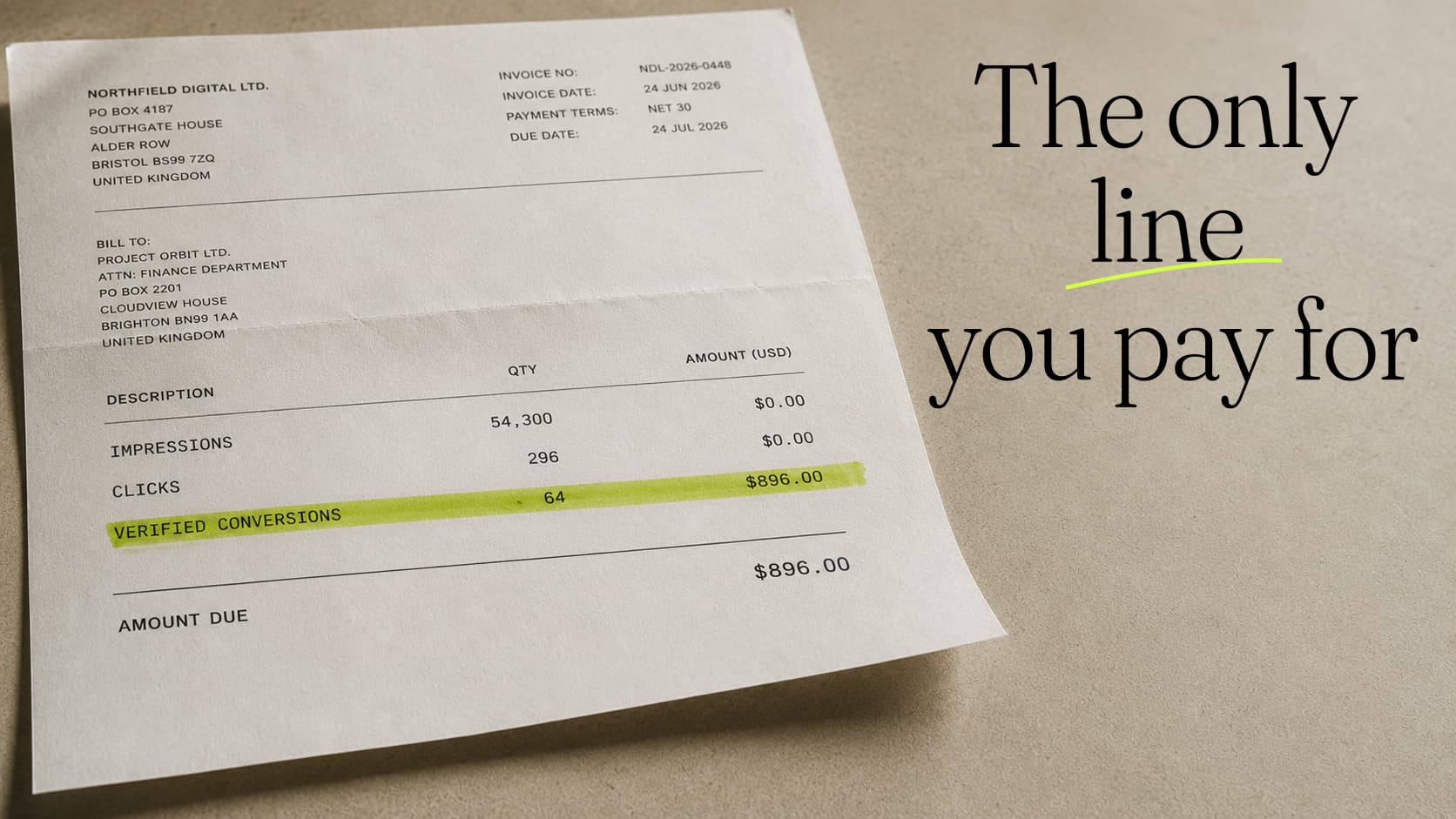
A verified onchain conversion is an advertising outcome proven by a blockchain transaction: a user who saw an ad went on to perform the target action (a swap, a deposit, a mint), and the conversion is tied to a transaction hash that anyone can independently check. It is the difference between “our dashboard says this worked” and “here is the public record.”
How verification works
The mechanism has three parts:
- Identity. The network knows which wallets belong to the users who saw or engaged with a campaign. In Specify’s case, wallets and devices resolve to one person through Specify ID, so the same human is never counted (or charged for) twice.
- Observation. Because blockchains are public, the target action is visible the moment it happens: the swap on the DEX, the deposit in the vault, the bridge transaction. No pixel, no postback, no self-reported analytics.
- Attribution. The conversion is credited within a defined window (Specify uses 14-day attribution) and recorded against the campaign with its transaction hash, so the advertiser can audit every line of the invoice against the chain itself.
Why it matters
Web2 ad measurement depends on trusting the measurer: clicks can be bots, installs can be farmed, and last-click attribution credits whatever touched the user most recently. Onchain verification removes the trust requirement. It also changes what you can measure afterward: because converted wallets stay visible onchain, you can track lifetime volume per converted user, real LTV, and true ROI rather than day-one numbers.
Verification also enables a different billing model. When outcomes are provable, a network can charge per conversion instead of per impression, which is how Specify bills: CPA against verified onchain conversions, with bigger conversions priced higher and smaller ones lower.
Verified conversions vs incrementality
One caution: a verified conversion proves the action happened, not that the ad caused it. That second question is answered by incrementality testing, where an otherwise identical holdout audience never sees the ads and the two groups are compared. Run together, the two techniques give the cleanest answer advertising can offer: the conversions are real, and the lift is measured. CoW Swap’s campaign measured 6x lift this way, alongside 1,500+ verified conversions and more than $50M in attributed volume.
Quick answers
Can a verified onchain conversion be faked? The transaction itself cannot; it is on a public chain. Quality control instead focuses on who converts, which is why sybil-resistant identity (one human, one charge) matters as much as the verification.
Does it work for actions that are not transactions? The model fits any outcome that settles onchain. Offchain goals (newsletter signups, app installs) still need conventional tracking.
What does it cost to try? Specify runs a $1,000 test campaign with onchain targeting, a 15,000-impression calibration flight, and a full report of the verified results.